
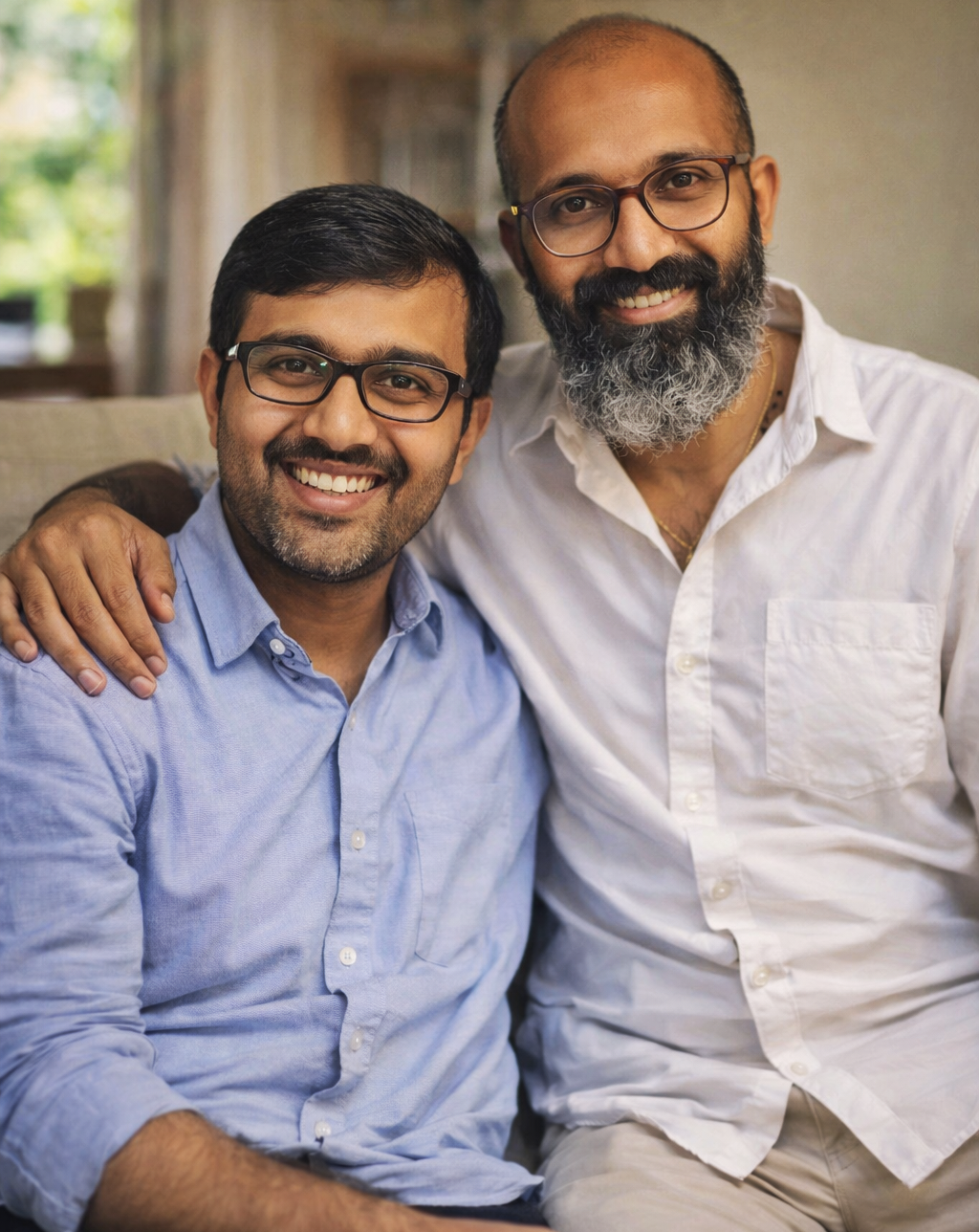
I am ready to die today, peacefully and without regret, yet something small and silent still feels incomplete.
I have lived my life fully, and I feel content with what life has given me and taken away. I am not holding on to fear or unfinished ambition. In many ways, I feel complete. At the same time, I live in the material world, where I have clear responsibilities. I care deeply for my wife and my daughter, and I fulfill my duties toward them with love and commitment. Yet, in a spiritual sense, I also understand that no one truly owns another’s life. Life is not created by us; it is gifted by God. We walk together for some time, support each other, and then continue our journeys. Holding this balance between responsibility and surrender has become part of my understanding of life.
Even with this sense of completeness, I notice that something is missing—not in achievement, not in recognition, but in relationship. That absence is the closeness I once shared with my elder brother during my childhood. I have two elder sisters, and they have always loved me in a steady and caring way. I remain close to them, and their presence gives me emotional balance. Yet, the bond I shared with my brother was different. We grew up together, side by side, sharing the same days and the same small world. I do not remember a single day of my early life without him, and that continuous togetherness shaped me quietly and deeply.
As I grew older, life naturally changed its direction. Responsibilities increased, and the simplicity of childhood slowly faded. I understood that brotherhood also changes with time. As people grow, they move into work, marriage, and different social roles, and the closeness of early years naturally reduces. This change does not happen because love disappears, but because life keeps moving forward. Childhood bonding slowly becomes memory, and daily presence turns into distance, even when respect and care remain. I accepted this truth as part of growing older.
The most significant shift came after my mother passed away. She was the silent center of our family, holding everyone together without effort. After her death, the family continued in form, but something essential was missing. A few months later, certain family situations arose, leading to misunderstanding and emotional distance between my brother and me. He felt some anger toward me, though both of us knew that no one was truly at fault. Loss often expresses itself in indirect ways. When grief remains unspoken, it quietly changes relationships. Today, I feel settled within myself and at peace with life. I feel ready for its end whenever it comes. Still, spiritual understanding has taught me that inner completeness does not erase human bonds. A brother is not only part of a family, but a witness to one’s earliest becoming. Even without closeness, that bond remains alive in a subtle way, accepted as part of the natural flow of life gifted by God.
I don’t need my brother to solve my problems.
I don’t need him to guide me.
I don’t need him to protect me anymore.
I need him because
some bonds are not logical.
I need him because
some connections are older than words.
I need him because
when the world feels silent,
a brother’s presence makes silence warm.
I need him because
he remembers my childhood
better than I do.
Love Does Not Die in Distance
Even if we don’t speak,
love does not die.
Even if time passes,
love does not fade.
Even if misunderstandings exist,
love waits patiently.